WebAssembly + WASI 1.0: The Quiet Container Replacement
WASI 1.0 lands in 2026 and the implications are bigger than the announcement made them sound — sub-second cold-starts, real sandboxing, and a path past Docker.

WebAssembly has been "almost ready for the server" for so long it became a meme. Quietly, in 2026, that stopped being true.
What WASI 1.0 actually unlocks
WebAssembly System Interface (WASI) is the layer that lets WebAssembly talk to a host operating system — files, sockets, environment variables, the things real programs need. Before WASI, WebAssembly was a sandbox that couldn't do much.
WASI 1.0 is the version that's stable enough to bet on.
"The planned release of WASI 0.3.0 in 2026 will mean that WebAssembly will be able to increasingly replace containers, which are not ideally suited for a number of applications." — The New Stack
What changed:
- Async I/O is first-class. Servers stop blocking.
- Component model is shipping. Modules can be composed cleanly across language boundaries.
- Capability-based security is the default. Modules get only the system access you grant.
Why this beats containers for some workloads
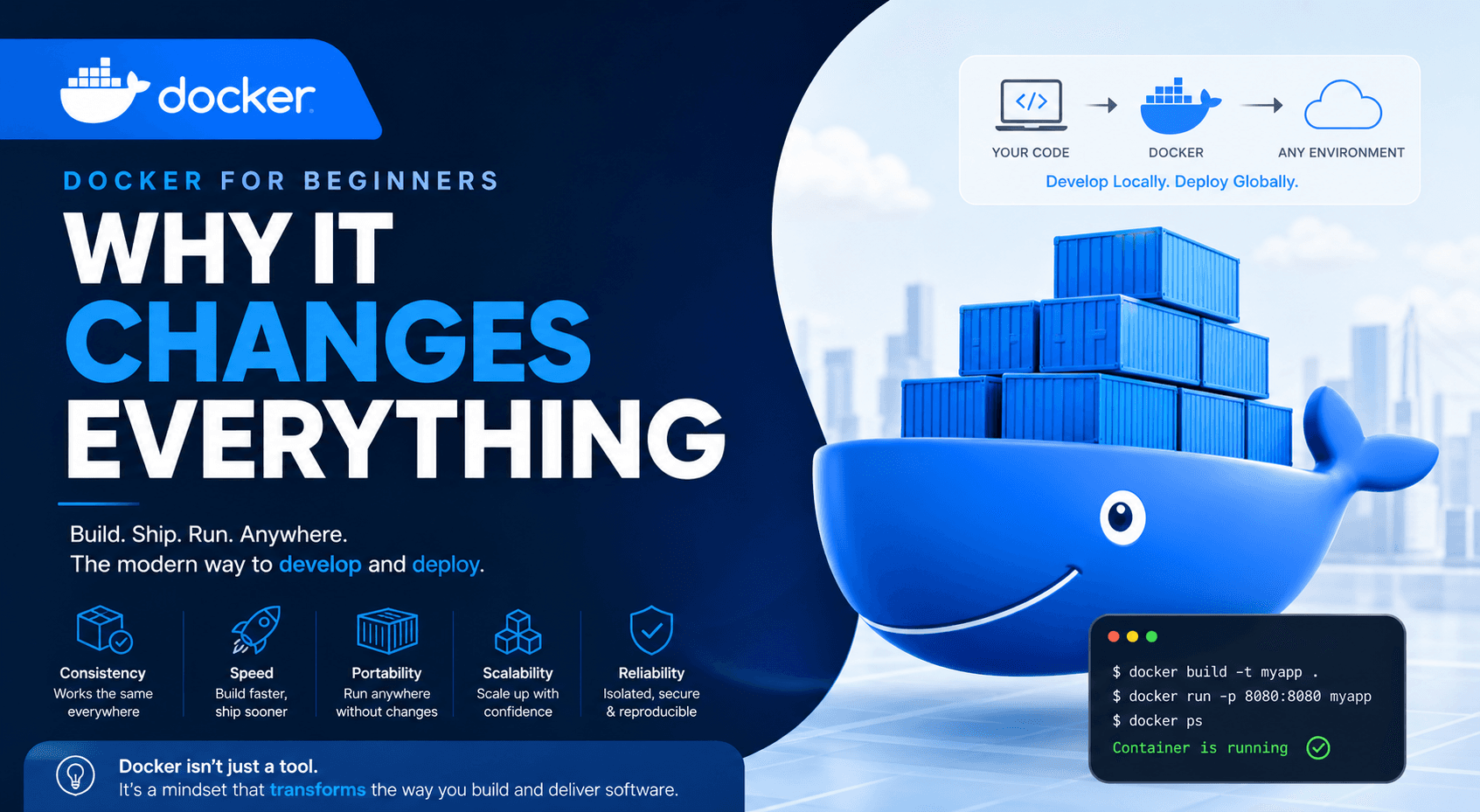
            Cold start   Image size   Memory   Sandbox
            ──────────   ──────────   ──────   ───────
  Docker     500ms+      50–500 MB   100 MB+   Linux ns
  Firecracker 125ms      ~10 MB      ~50 MB    Linux ns
  WASM/WASI  <5ms        ~1–10 MB    ~5 MB     Capability
The cold-start gap is the killer. A container takes hundreds of milliseconds to start. A WebAssembly module takes single-digit milliseconds. For serverless functions, plug-in systems, and AI-agent runtimes, that's the difference between "viable" and "broken."
"Compiling Rust modules to WebAssembly in under a second and then JIT-compiling and executing them in sandboxed instances." — The New Stack, on agent-native infra
Where it's actually being used
This isn't theoretical. Three concrete deployments running today:
1. Plugin systems for SaaS products. Figma's been doing this for years. In 2026, every SaaS with a plugin marketplace is moving to WebAssembly because the alternatives — V8 isolates or Lua sandboxes — don't give you language flexibility.
2. AI agent sandboxing.
"WebAssembly could solve AI agents' most dangerous security gap." — The New Stack
When an agent generates and runs code at runtime, you need the strongest possible sandbox. Containers have a 10MB attack surface (the kernel). WebAssembly has roughly zero — the module literally cannot touch anything you didn't expose.
3. Edge compute. Cloudflare Workers, Fastly Compute, and similar platforms run WebAssembly under the hood. Cold start in single-digit milliseconds means you can run user code per-request without the cost spiraling.
What it doesn't replace
WebAssembly isn't going to replace your Postgres container. It's not going to host your Next.js app (yet). The applicable workloads are specific:
- Functions / lambdas
- Plugin systems
- Sandboxed user code
- AI agent execution
- Edge compute
If your app is "long-running stateful service that talks to a database," containers stay better for now.
Getting started
The minimum-viable WebAssembly hello-world in 2026:
# Install the tooling
curl https://wasmtime.dev/install.sh -sSf | bash

# Compile a Rust function to WASM
cargo new --lib hello && cd hello
echo 'crate-type = ["cdylib"]' >> Cargo.toml
cargo build --target wasm32-wasi --release

# Run it
wasmtime target/wasm32-wasi/release/hello.wasm
Five commands. Sub-second cold start. No Dockerfile.
The 2027 prediction
Containers don't go away. They become the default for stateful services and the long tail of legacy code. WebAssembly takes over the new categories — anything where cold-start, density, or sandboxing matters.
If you're building anything in those categories in 2026, learning WebAssembly is now table-stakes, not exotic. The tooling finally caught up.